


Thursday, 5 November 2015
Damn and Diu
Daman and Diu /dəˈmɑːn/ & /ˈdiːuː/ ( locally (help·info)) is a union territory in India. Its capital is Daman.
Railways: There is no railway link with Daman and Diu. The Nearest railway station from Daman is Vapi on western railway on Mumbai-Delhi route. The nearest railway station from Diu is Delvada on meter-gauge.
Aviation: There are airports both in Daman and Diu. Diu has been connected by air and there is regular air service from Mumbai to Diu.


Important tourist places in Daman are as under: Bom Jesus Church, Our Lady of Sea Church; Our Lady of Remedios Church; Forts of Moti Daman and Nani Daman; Jampore and Devka Beaches; Public Garden and Moti Daman Jetty, Pargola Garden, Moti Daman, Amusement Park, Devka; Damanganga Tourist Complex, Kachigam; Satya Sagar Udyan, Mirasol Garden, Mirasal Water Park.
In Diu, St. Paul's Church; Diu Fort and Panikota Fort; Nagoa and Chakratirth and Children's park at Ghoghla and Summer House are famous places of tourist interest.
locally (help·info)) is a union territory in India. Its capital is Daman.History and Geography
Daman and Diu along with Goa was a colony held by the Portuguese, even after the Independence. In 1961, it was made an integral part of India. After conferring statehood on Goa on 30 May, 1987, Daman and Diu was made a separate Union Territory. Daman lies about 193 km away from Mumbai. It is bound on the east by Gujarat, on the west by the Arabian Sea, on the north by the Kolak River, and on the south by Kalai river. The neighbouring district of Daman is Valsad in Gujarat. Diu is an island connected by two bridges. The neighbouring district of Diu is Junagadh of Gujarat.Transport
Roads: The total length of roads in Daman and Diu are 191 km and 78 km respectively.Railways: There is no railway link with Daman and Diu. The Nearest railway station from Daman is Vapi on western railway on Mumbai-Delhi route. The nearest railway station from Diu is Delvada on meter-gauge.
Aviation: There are airports both in Daman and Diu. Diu has been connected by air and there is regular air service from Mumbai to Diu.
Tourist Centres
Important tourist places in Daman are as under: Bom Jesus Church, Our Lady of Sea Church; Our Lady of Remedios Church; Forts of Moti Daman and Nani Daman; Jampore and Devka Beaches; Public Garden and Moti Daman Jetty, Pargola Garden, Moti Daman, Amusement Park, Devka; Damanganga Tourist Complex, Kachigam; Satya Sagar Udyan, Mirasol Garden, Mirasal Water Park.
In Diu, St. Paul's Church; Diu Fort and Panikota Fort; Nagoa and Chakratirth and Children's park at Ghoghla and Summer House are famous places of tourist interest.
Fort of St. Jerome, Zampa Gateway, Church of St. Francis of Assisi, Jallandhar, Gangeshwar temple, Nagoa beach, Gomptimata temple, Jama Masjid. Some other noteworthy Daman & Diu travel destinations are the stately Light House, the amusement park and the Gandhi Park that are located at Daman jetty.
Wednesday, 4 November 2015
Dadra And Nagar Haveli
Dadra and Nagar Haveli /ˈdɑːdrɑː/ & /ˌnʌɡərˌhəˈvɛli/ is a Union Territory in Western India. Nagar Haveli is wedged between Maharashtra and Gujarat, whereas Dadra is an enclave 1 km NW, surrounded by Gujarat. The shared capital is Silvassa. The larger part spans a roughly c-shaped area up-river from the city of Daman on the coast, at the centre of which, and thus outside the territory, is the Madhuban reservoir.
Dadra and Nagar Haveli (DNH) are in the middle of the undulating watershed of the Daman Ganga River, which flows through Nagar Haveli and later forms the short southern border of Dadra. The towns of Dadra and Silvassa lie on the north bank of the river. The Western Ghats range rises to the east, and the foothills of the range occupy the eastern portion of the district. While the territory is landlocked, the Arabian Sea is just to its west, and can be reached via the state of Gujarat.



places to visit in the Union Territory of Dadra and Nagar Haveli.
Dadra and Nagar Haveli (DNH) are in the middle of the undulating watershed of the Daman Ganga River, which flows through Nagar Haveli and later forms the short southern border of Dadra. The towns of Dadra and Silvassa lie on the north bank of the river. The Western Ghats range rises to the east, and the foothills of the range occupy the eastern portion of the district. While the territory is landlocked, the Arabian Sea is just to its west, and can be reached via the state of Gujarat.
places to visit in the Union Territory of Dadra and Nagar Haveli.
1. Vanganga Lake Garden
Just 5 kms from the capital city Silvassa, Vanganga Lake Garden is heaven for nature lovers. The very sight of the sprawling 7.58 hectares of ‘picture perfect’ garden with its beautiful lake captivates your soul. The huge lake in the garden has an island at the center, which stands connected to the garden by a bridge reflecting the influence of Japanese architecture. The island gives the garden the name ‘Island Garden’ and more to appease your visual appetite with tall green trees lining the lake and small fountains with scenic lighting arrangements. You can jog, walk or unwind in one of the cottages here that provides you with seating arrangements.2. Hirwa Van Garden
Yet another spectacular garden in the Union Territory, the only difference being that it is forest made by man. Situated on the Silvassa – Dadra road, the garden is a superb specimen of architecture. Mesmerizing waterfalls, beautiful cascades, small springs, stone walls, arches, lush greenery, colorful flowers, crisscross walkways, in fact, everything about Hirwa Van Garden is amazing. There is a separate play section for children and the play equipments available here keep the children amused when you are lost in tranquility.3. Dudhni Lake
Located 40 kms away from Silvassa, Dudhni Lake is a vast expanse of water surrounded by small hills. Famously referred to as the ‘Kashmir of the West’, the lake is formed by the waters of Madhuban reservoir. The isolated Dudhni, which is home to the lake, calms your senses. Well, you have entertainments that can make your adrenalin flow. The water sports available here include rowing boats, speed boats, water scooters, kayaks, canoes, jet skis and shikara rides. Trekking through the dense forests and camping on the river side would be a memorable adventure. If you love to have a glimpse of the life of tribals, here is your chanch.4. Kauncha
Located on the banks of Madhuban Dam, Kauncha is the perfect destination for nature lovers. Dense forests, spectacular mountain ranges and scenic valleys of Kauncha enchant you while the tribal life make you envy them for the simple and contended life they lead amidst the richness of nature. Feel how it would be like to be a part of the world that does not have technological facilities but can offer you the experience of a lifetime. Adventure seekers can have a whale of a time here rowing boats, skiing and canoeing. For those who love trekking, here is an opportunity to trek, camp and count the stars that gaze from above. 5. Silvassa Vasona Lion Safari Covering an area of 20 hectares of land, Vasona’s Lion Safari gives you a thrilling experience. After all, is it not exciting to have the opportunity of watching lion in its home rather than the cage where its space and movement are restricted? Lion Safari Park is 9 kms from Silvassa. It has a seven meter high wall to ensure safety. Special vehicles designed to tour the dense land take you inside to have a glimpse of the life of lion, the king of forest.6. Tribal Cultural Museum
A trip to any destination is never complete without visiting the places that highlight the history of the place and its past and present lifestyle. Tribal Cultural Museum in Dadra and Nagar Haveli give you an insight into the rich cultural heritage of the tribals of the land. The museum has a collection of hunting tools, traditional jewelry and musical instruments used by the tribals. This is also the right place for you to acquire souvenirs to preserve the memories of your visit to Dadra and Nagar Haveli. Handcrafts made by the tribals are exquisite and will serve as an excellent reminder of your tour.7. Swaminarayan Temple
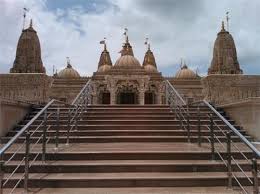
Located on River Daman Ganga banks, Swaminarayan Temple is a perfect example for architectural splendor. If you have a keen eye for architecture, just a photograph of the temple would trigger your interest to plan a trip to the site regardless of your faith. You will be amazed to find that not a piece of the structure is left without carvings. The spacious garden and the magnificent construction mesmerize visitors.8. Madhuban Dam
Madhuban Dam, one of the star attractions of Dadra and Nagar Haveli offers excellent facilities to indulge in water sports. Rides in speed boats, passenger boats, water scooters, canoes and aqua bikes attract tourists in great numbers. Water sports apart, the views of the dense forests around are stunning. The site has luxurious tents where you have cooking facilities too.9. Bindrabin Temple
Also called as Tadkeshwara Temple, Bindrabin Temple, which is dedicated to god Shiva, is situated 18 kms away from Silvassa. The location of the temple in itself is very serene – on Sakartod River banks surrounded by tall trees. The atmosphere relaxes you and you can make yourself more comfortable in one of the three cottages set up by the Department of Silvassa tourism. You can find an eatery too. Children can indulge in the recreational area near the temple.10. Church of Our Lady of Piety
A reminder of Portuguese rule in the land, Church of Our Lady of Piety was built during 18th century. It is situated opposite Tribal Museum. The stone made church has amazing arches at the outside and well constructed interiors. You can have some peaceful moments for yourself once you are inside.Pondicherry
Pondicherry is the capital city of The Union Territory of Puducherry and is one of the most popular tourist destinations in South India.
A French colony until 1954, this coastal town retains a number of colonial buildings, churches, statues, and systematic town planning, as well as urban architecture of the local Tamil style. As such the town has been dubbed "The Europe of India". The town struggles to preserve what little remains of the ambiance once created by this unique mix of cultural heritage.It nevertheless draws tourists from around the world and from across India. Pondicherry is also a popular weekend destination, which can be reached easily from the nearby cities such as Chennai and Bangalore, principally because lower taxation on alcoholic beverages makes drinking in the Union Territory enclave much less expensive than in neighboring states.


For those coming to Pondicherry expecting a Goa-like place there is likely to be a great deal of disappointment. Unlike Goa, Pondicherry does not have a commercial infrastructure to entertain tourists. Pondicherry is a great place to look around, take a walk by the sea, attend a cultural program.
The Pondicherry tourism department uses the punch-line "Give time a break" for their advertisement campaign. And that is indeed one of the more attractive features of this city. So relax, put your feet up, switch off your cell phone, and forget all about returning to work on Monday morning. Enjoy a fine meal with a glass of wine, rent a bicycle and take a ride at the promenade, take a walk in the park. Do something new an interesting that you wouldn't do in the city you live in. Learn some pottery at the Golden Bridge Pottery.
You can also do some serious meditation at the Auroville, the Sri Aurobindo Ashram. Or you could visit Aurovilleto watch a cultural event such as a dance organized there by the Auroville Cultural Exchange. You can also go fishing in a Kattaraman- fishing raft of sorts.
A French colony until 1954, this coastal town retains a number of colonial buildings, churches, statues, and systematic town planning, as well as urban architecture of the local Tamil style. As such the town has been dubbed "The Europe of India". The town struggles to preserve what little remains of the ambiance once created by this unique mix of cultural heritage.It nevertheless draws tourists from around the world and from across India. Pondicherry is also a popular weekend destination, which can be reached easily from the nearby cities such as Chennai and Bangalore, principally because lower taxation on alcoholic beverages makes drinking in the Union Territory enclave much less expensive than in neighboring states.
WHATS SPECIAL


For those coming to Pondicherry expecting a Goa-like place there is likely to be a great deal of disappointment. Unlike Goa, Pondicherry does not have a commercial infrastructure to entertain tourists. Pondicherry is a great place to look around, take a walk by the sea, attend a cultural program.
The Pondicherry tourism department uses the punch-line "Give time a break" for their advertisement campaign. And that is indeed one of the more attractive features of this city. So relax, put your feet up, switch off your cell phone, and forget all about returning to work on Monday morning. Enjoy a fine meal with a glass of wine, rent a bicycle and take a ride at the promenade, take a walk in the park. Do something new an interesting that you wouldn't do in the city you live in. Learn some pottery at the Golden Bridge Pottery.
You can also do some serious meditation at the Auroville, the Sri Aurobindo Ashram. Or you could visit Aurovilleto watch a cultural event such as a dance organized there by the Auroville Cultural Exchange. You can also go fishing in a Kattaraman- fishing raft of sorts.
Lakshadweep
Lakshadweep (/ləkˈʃɑːdwiːp/, Lakṣadvīp (help·info), Lakshadīb, Malayalam: ലക്ഷദ്വീപ്, Mahl: ލަކްޝަދީބު), formerly known as the Laccadive, Minicoy, and Aminidivi Islands (/ˌlækədaɪv ˌmɪnɨkɔɪ/ & /ˌæmɨnˈdiːvi/), is a group of islands in the Laccadive Sea, 200 to 440 kilometres (120 to 270 mi) off the south western coast of India. The archipelago is a Union Territory and is governed by the Union Government of India. They were also known as Laccadive Islands, although geographically this is only the name of the central subgroup of the group. Lakshadweep comes from "Lakshadweepa", which means "one hundred thousand islands" in Sanskrit as well as many Indian languages like Telugu, Malayalam, Tulu, Kannada, Hindi, Tamil and others.The islands form the smallest Union Territory of India: their total surface area is just 32 square kilometres (12 sq mi).2 The lagoon area covers about 4,200 square kilometres (1,600 sq mi), the territorial waters area 20,000 square kilometres (7,700 sq mi) and the exclusive economic zone area 400,000 square kilometres (150,000 sq mi). The region forms a single Indian district with ten sub divisions. Kavaratti serves as the capital of the Union Territory and the region comes under the jurisdiction of Kerala High Court. The islands are the northernmost of the Lakshadweep-Maldives-Chagos group of islands, which are the tops of a vast undersea mountain range, the Chagos-Laccadive Ridge.
As the islands do not have any aboriginal groups, different views have been postulated by the scholars about the history of habitation on these islands. Archaeological evidence support the existence of human settlement in the region around 1500 BC. The islands have long been known to sailors, as indicated by an anonymous reference from the first century AD to the region in Periplus of the Erythraean Sea. The islands were referenced also in the Buddhist Jataka stories of the 6th century BC. The arrival of Muslim missionaries around 7th century led to the advent of Islam in the region. During the medieval period the region was ruled by the Chola dynasty and Kingdom of Cannanore. The Portuguese arrived around 1498 and were upstaged by 1545. The region was then ruled by the Muslim house of Arakkal, followed by Tipu Sultan. On his death in 1799 most of the region passed on to the British and with their departure the Union Territory was formed in 1956.
Ten of the islands are inhabited. At the 2011 Indian census the population of the Union Territory was 64,473. The majority of the indigenous population is Muslim and most of them belong to the Shafi School of the Sunni Sect. The islanders are ethnically similar to the Malayali people of the nearest Indian state of Kerala. Most of the population speaks Malayalam with Mahi (or Mahl) being the most spoken language in Minicoy island. The islands are served by an airport on the Agatti island. The main occupation of the people is fishing and coconut cultivation, with tuna being the main item of export.
The Society for Promotion of Nature Tourism and Sports (SPORTS) is a society formed by the Lakshadweep Administration in 1982 with the avowed aim of tapping tourism potential of theislands and to act as the nodal agency of Lakshadweep Administration for promotion of tourism in the islands. It is registered under Section 3 of theSocieties Registration Act of 1860. The primary aim of the organization is to promote eco-friendly tourism and recreational activities in the islands in association with and under guidance of the Lakshadweep Administration. SPORTS also acts as hospitality and catering wing of the Lakshadweep Administration. The Society operates tourist resorts at Kadmat,Minicoy and Kavaratti. It also conducts package tour covering three islands - Minicoy, Kalpeni and Kavaratti. Apart from operating these resorts SPORTS is manning State Guest House and Dak Bungalows of the Administration. SPORTS also strives to provide employment opportunities to the educated locals the tourism sector.
Lakṣadvīp (help·info), Lakshadīb, Malayalam: ലക്ഷദ്വീപ്, Mahl: ލަކްޝަދީބު), formerly known as the Laccadive, Minicoy, and Aminidivi Islands (/ˌlækədaɪv ˌmɪnɨkɔɪ/ & /ˌæmɨnˈdiːvi/), is a group of islands in the Laccadive Sea, 200 to 440 kilometres (120 to 270 mi) off the south western coast of India. The archipelago is a Union Territory and is governed by the Union Government of India. They were also known as Laccadive Islands, although geographically this is only the name of the central subgroup of the group. Lakshadweep comes from "Lakshadweepa", which means "one hundred thousand islands" in Sanskrit as well as many Indian languages like Telugu, Malayalam, Tulu, Kannada, Hindi, Tamil and others.The islands form the smallest Union Territory of India: their total surface area is just 32 square kilometres (12 sq mi).2 The lagoon area covers about 4,200 square kilometres (1,600 sq mi), the territorial waters area 20,000 square kilometres (7,700 sq mi) and the exclusive economic zone area 400,000 square kilometres (150,000 sq mi). The region forms a single Indian district with ten sub divisions. Kavaratti serves as the capital of the Union Territory and the region comes under the jurisdiction of Kerala High Court. The islands are the northernmost of the Lakshadweep-Maldives-Chagos group of islands, which are the tops of a vast undersea mountain range, the Chagos-Laccadive Ridge.As the islands do not have any aboriginal groups, different views have been postulated by the scholars about the history of habitation on these islands. Archaeological evidence support the existence of human settlement in the region around 1500 BC. The islands have long been known to sailors, as indicated by an anonymous reference from the first century AD to the region in Periplus of the Erythraean Sea. The islands were referenced also in the Buddhist Jataka stories of the 6th century BC. The arrival of Muslim missionaries around 7th century led to the advent of Islam in the region. During the medieval period the region was ruled by the Chola dynasty and Kingdom of Cannanore. The Portuguese arrived around 1498 and were upstaged by 1545. The region was then ruled by the Muslim house of Arakkal, followed by Tipu Sultan. On his death in 1799 most of the region passed on to the British and with their departure the Union Territory was formed in 1956.
Ten of the islands are inhabited. At the 2011 Indian census the population of the Union Territory was 64,473. The majority of the indigenous population is Muslim and most of them belong to the Shafi School of the Sunni Sect. The islanders are ethnically similar to the Malayali people of the nearest Indian state of Kerala. Most of the population speaks Malayalam with Mahi (or Mahl) being the most spoken language in Minicoy island. The islands are served by an airport on the Agatti island. The main occupation of the people is fishing and coconut cultivation, with tuna being the main item of export.
The Society for Promotion of Nature Tourism and Sports (SPORTS) is a society formed by the Lakshadweep Administration in 1982 with the avowed aim of tapping tourism potential of theislands and to act as the nodal agency of Lakshadweep Administration for promotion of tourism in the islands. It is registered under Section 3 of theSocieties Registration Act of 1860. The primary aim of the organization is to promote eco-friendly tourism and recreational activities in the islands in association with and under guidance of the Lakshadweep Administration. SPORTS also acts as hospitality and catering wing of the Lakshadweep Administration. The Society operates tourist resorts at Kadmat,Minicoy and Kavaratti. It also conducts package tour covering three islands - Minicoy, Kalpeni and Kavaratti. Apart from operating these resorts SPORTS is manning State Guest House and Dak Bungalows of the Administration. SPORTS also strives to provide employment opportunities to the educated locals the tourism sector.


Jarkhand
Jharkhand (lit. "Bushland") is a state in eastern India carved out of the southern part of Bihar on 15 November 2000. The state shares its border with the states of Bihar to the north, Uttar Pradesh and Chhattisgarh to the west, Odisha to the south, and West Bengal to the east. It has an area of 79,710 km2 (30,778 sq mi). The industrial city of Ranchi is its capital and Dumka its sub capital.
About The T OURISM Department:-


About The T OURISM Department:-
The State of Jharkhand is endowed with immense bio-diversity, moderate climate, rich cultural and historical heritage, religious places of worship and ethnic aspects to make the State the ultimate destination for tourists. The State Government has a firm belief that development of tourism sector would not only generate immense employment opportunities – directly or indirectly – but also would contribute in accelerated economic development. This would not only ensure showcasing of rich traditional and cultural heritage of the State but also would have cascading effect in development of other sectors. Rightfully, the State Government has accorded TOURISM THE STATUS OF INDUSTRY in Jharkhand. It is felt that to ensure rapid development in tourism sector, there is a need to develIt is felt that to ensure rapid development in tourism sector, there is a need to develop tourist circuits and destinations providing various amenities, both way-side and at different destination points, supporting the tourists by providing conveyance, lodging and other pre-requisites, etc. Involvement of private sector, villagers and other stake holders as partners in promotion and development of tourism industry of the State is an important and critical aspect, which would go a long way in maintenance, upkeep and sustenance of the assets and facilities created in this regard for a long time. Making the people of the State, Nation and the World aware of the rich endowments of nature, its cultural heritage, spiritual places and other traditions are essential impediments for boosting tourism industry in the State. An outlay of Rs. 160 crores has been provided for continuing and new schemes in 2007-08. All proposed schemes are to be completed in the stipulated time.
Fast Facts
- Area: 79,714 Sq. Km
- Capital: Ranchi
- Districts: 24
- Airports: Birsa Munda Airport (Ranchi)
- Railway Station: Ranchi Junction and Hatia Railway Station
- Climate: Pleasant and equable throughout the year.
- Clothing: Summer - Light Cottons Winter - Heavy woollens.
- Languages spoken: Santhali, Mundari, Kurukh, Khortha, Nagpuria, Sadri, Khariya, Panchparagnia, Ho, Karmali, Hindi, Urdu, Bengali
- Best Time to visit: February to April
Tourism means exactly what it should for those who love to travel relatively undisturbed natural areas, jharkhand is a destination par excellence. With its natural bounties unspoiled the region always attract the tourist. And its habitants welcome them with the heartly laughter as the bubbling of their waterfall. Tourism is certainly not merely passing through an area. It involves studying appreciating, enjoying , flora and fauna the existing culture of the original inhabitants of the area. Jharkhand is a rare state that offers a tourist all these and much more together they make the state dream destination for tourist irrespective of their particular interest. More about Jharkhand
You can find pure, unadulterated joy in Jharkhand. Because this is one Indian state that has survived the ill effects of urbanization to a surprising degree. Forests, hills, valleys, waterfalls, wildlife, history, culture, charming towns and vibrant cities – everything embraces the visitor as only a slice of paradise on earth can. And the people, the pristine tribal communities who are the original dwellers of the land, rejoice in their visitors, Those who have returned to Jharkhand more than once, have discovered that the genuine Jharkhand is as exotic and beautiful as the mythical one and far more exciting than the one promoted by the visitor industry.
If Jharkhand's awesome scenic beauty is the one thing that never disappoints – the festivals, the music, the dancing, the language and literature, the gracious and handsome towns and booming industrial centers, won't either. This is one place where the sun seems to radiate hope. The evening sky overflows with stars. The hills seem to be moving like the waves of the sea. The tribal drums weave their rhythmic magic. And the spirit revives in an atmosphere that is best described as unique. Life seems far less complicated and far more captivating when you're in Jharkhand. Here's where you can do your own thing – follow what everybody else follows, or break pleasure of a walk-in the-woods.
You can find pure, unadulterated joy in Jharkhand. Because this is one Indian state that has survived the ill effects of urbanization to a surprising degree. Forests, hills, valleys, waterfalls, wildlife, history, culture, charming towns and vibrant cities – everything embraces the visitor as only a slice of paradise on earth can. And the people, the pristine tribal communities who are the original dwellers of the land, rejoice in their visitors, Those who have returned to Jharkhand more than once, have discovered that the genuine Jharkhand is as exotic and beautiful as the mythical one and far more exciting than the one promoted by the visitor industry.
If Jharkhand's awesome scenic beauty is the one thing that never disappoints – the festivals, the music, the dancing, the language and literature, the gracious and handsome towns and booming industrial centers, won't either. This is one place where the sun seems to radiate hope. The evening sky overflows with stars. The hills seem to be moving like the waves of the sea. The tribal drums weave their rhythmic magic. And the spirit revives in an atmosphere that is best described as unique. Life seems far less complicated and far more captivating when you're in Jharkhand. Here's where you can do your own thing – follow what everybody else follows, or break pleasure of a walk-in the-woods.
Hundru Fall
Hundru fall is about 45 kms away from Ranchi Town. The Swarnarekha river falls from a height of 320 feet making a wonderful scene known as Hundru falls. At the base of the fall a beautiful pool is formed which allows visitors to take a good bath, but with precautions. During rainy season it takes a formidable form but in summer it turns in to an exciting picnic spot. The diverse shape of the rock adds splendour to the place, which has been shaped from the attrition by the frequent fall of water. The picturesque grandeur of Hundru falls mesmerize the tourists, and fill their hearts with delight.
Jonha Fall
From Ranchi take the NH-32 to Angarha. From there a left turn takes you 22 km to Hundru, whereas the straight road takes you to Jonha and Sita, 16 km from Angarha is Amrutbagan Chowk, from where a 5 km drive will take you to Jonha. 1 km short of Jonha is a diversion, from where a 5 km drive will take you to Sita.
Betla National Park
Betla National Park is a national park located in the Chota Nagpur Plateau of the Palamu district of the Indian state of Jharkhand, in India. The park boasts a wide variety of wild life. Initially comprising the 1,026 km² of the Palamau Tiger Reserve, an additional 226 km² was added to the park in 1989 and 63 km² of the Mahuadar wolf sanctuary. Betla was one of the first national parks in India to become a tiger reserve under Project Tiger. The park is under administration of the forest department.
Dalma Wildlife Sanctuary
Dalma Wildlife Sanctuary is located 10 km from the city of Jamshedpur in the Indian state of Jharkhand. It was inaugurated by Sanjay Gandhi in 1975. Dalma Wildlife Sanctuary is situated around the Dalma Hills. Dalma Wildlife Sanctuary is a much larger area starting from Chandil to 40 km east. The Sacntuary on paper is spread around in 195 km².
Rock Garden
Rock Garden is located in Ranchi town. Best place to spend holiday. It is situated about 4 km away from Albert Ekka chowk. There is a big lake beside the hill that is known as Kanke dam.
Jubilee Park
The emerald green Jubilee Park, spread over 225 acres and adorned with flower beds, gardens and illuminated fountains, was a gift by the Tata Steel Company to the citizens of Jamshedpur on its Golden Jubilee Year. It's a big attraction within the city limits that is easily reachable from any direction.
Deoghar
Deoghar (also called Baidyanath Dham) is 250 kms from ranchi. It is famous for the most revered of all Jyotirlingams, the Baidyanath (Shiva) Jyotirlingam temple also known as the Kamnalingam Temple.
Rajrappa
Rajrappa Temple: About 80 k.m. from Ranchi on Ramgarh Chitrapur Road, Rajrappa is a "Shakti Pith" situated on the confluence of two rivers known as Damodar and Bhairvi (Bhera).The Chinnamastika Temple is a very famous and a popular place of Hindu pilgrimage. The temple is very old and its architectural design is the same as that of other temples of Tantrik importance.
Nellore
 Sri Talapagiri Ranaganatha swamy Temple is located in Nellore city and is about 5kms away from Nellore Bus stand. RanganadaSwamy Temple in Nellore is more than 600years old. This temple is situated on the banks of the river Pennar and is marked by a huge 29 Mts tall Galigopuram with seven gold kalasams and its architectural splendour. The annual Rath Yathra of the God is a much awaited ritual in Nellore.
There are seven kalisams, which brings beauty to the temple. Every year during the month of March-April (varies according to Hindu calendar) grand festival is celebrated. These are called Brahmotsavam.
On the bank of river penna sri kashyapa Maharshi performed yagna and as a fruit of his penance conferred upon him the gift of establishing himself as Ranganadha Swamy at Nellore in 7th cebtury, by Pallava ruler Sri Rajaraja Narendra. Subsequently in 13th century Sri Jatha Varma has offered precious stones and metal to Lord Ranganadha Swamy. The Andhra Maha Bharatam i.e. from Viratprvam to the end of the epicwas written by the poet Sri kavi Brahma Tikkana, on the bank of pennar river. On the east there is seven storied Maha gopuram, south Sri Ranganayaki Lakshmi Devi) temple and beautiful mirror dias, west is sacred Pennar river and north Sri Andal Ammavari temple.
Jonnawada:
 Mallikarjuna Swamu kamakshi tai temple, Jonnawada which is located about 12 kms from Nellore. The destination is also well connected for Railway station at Nellore. A famous Sri Mallikarjuna Swamy Kamakhsi tai temple is located on the bank of river Pennar, 12 Km from Nellore. It attracts many piligirims. The Village is part of Buchireddipalem Mandal. In tretayuga Mahamuni Kasyapa Brahma performed yagna and pleased Lord Mallikarjuna Swamy thus this place is named as ‘Yagnavatika Jonnawada’. Sri Mallikarjuna Swamy Kamakhsi tai grant to the innumerable devotes their desires, as their God head. Since then he continues conferring boons and his blessings on his devotees. This temple is constructed in the year 1150( Tretayuga). The goddess Kamkshi is belived as an incarnation of Shakti. A ‘Sri Chakram’ was installed here by Sri Jagadguru Sankaracharya. Pilgrims take a holy dip in the lake known as Kachpateertham, near the temple, which washes away all their bad karma. Brahma Rushi Sri Kashyap Mahamuni visited Bhoolokam (The Earth) and wanted to perform Yagna and chosen north of vedadri as Yagna Vatika (place to perform yagna) After successful completion of the Yagna a bright light appeared. It has spread over the whole bhoolokam. Later Lord Eswara appeared as Lord Mallikarjuna, who came out from fire of Yagna.
There is bus service from Nellore to Jonnawada. For the convenienc of the pilgrims there are choultries of the Devastanam and TTD and also private choultries. Every year, during the celebration of Brahmstsavam in the month of Vaisaka, lakhs of devotees throng the holy centre to worship the goddess to attain salvation and Friday is the day very dear to Kamakshitai. One can find persons, persecuted by evil spirits, circumambulating in the temple precinct. A bathing ghat has been built on the bank of the Penna, for the convenience of the pilgrims.
Narasimhakonda:
 Vedagiri Lakshmimarasimha Swamy devastanam came into being nearly 500 years ago, on the summit of Narasimhakonad. According to the rock inscriptions, this temple was built by the Pallava king Narsimha Varma in the ninth century. Legend goes that the sage Kasyapa established the temple on the bank of Pinakini. And the vedic scripture “Brahmapurana” reveals that the seven sages (Saptarishis) performed “yagnam” (Sacrifice) on the top of Narasimhakonda. The seven (Koneru) tanks were renovated with Mandapas on the hilltop . The holy place lies 15Km. away from Nellore, on the southern bank of the river Pinakini. Every year “Brahmotsavams” are celebrated here in the month of May. Jonnawada is to the north of the river.
Penchalakona:-
 This is a very ancient sacred place (pilgrim centre). Lord Narasimha manifested Himself here as a huge of rock in “Yoga mudra” (in an entwined contemplative posture) and hence it acquired the name of “Penusila” (huge rock) and in course of time became famous as “Penchalakona”. Legend has it that after slaying the demon Hiranya Kasipa, Lord Narsimha bathed in Penchalakona and withdrew that “Avatara”(incarnation) of Narasimha, shedding His anger and ferocity. The Lord here goes by the name of Somasila Narasimhaswamy and has become one of the Nava Narasimhas (nine manifestations). People belive that because the sage Kanva resided in this area in the past, the river flowing here acquired the name Kanva Nadi and that with efflux of time it became Kandaleru. It is also learnt that the temple was renovated in the 10th century.
Penchalkona lies at the foothills of Veligondalu (mentioned earlier), at a distance of 80 km., from Nellore. Narasimha Jayanthi is celebrated every year in the month of May and devotees flock specially on Saturday. The Devestanam choultries provide facilities to the piligrims and there is bus service too.
Mannar Poluru:-
 Alghu Malluru Krishna Swamy temple is existing in the Mannarpoluru Village, right from the time of Telugu Chola rulers. The village is close-by to Sullurupet, at a distance of 103 Km. from Nellore. It was built in the 17th century by Bangaru Yadama Nayudu, the living place of mallayodas or wrestlers. According to a legend, it was here that Lord Sri Krishna defeated Jambavantha in a duel and married his daughter Jambavati and that Lord MahaVishnu deflated the bloated ego of Garutmata here alone. Apart from the idol of Satyabhama and Jambavati, the two consorts of Lord Krishna, the idol of Jambavantha creating the illusion of shedding tears are bound to amaze the viewers. One cannot help marvelling at the sculptural splendour exuded by the idols of the beauties.
Chengalamma Temple - Sullurupet
 Goddess Chengalamma Parameswari manifested Herself in the village of Sullurupet which lies 100Km. away from Nellore on the Kolkata-Chennai highway and the temple for Her was built on the bank of the Kanlangi river. History tells us that it was established during the fourth and fifth centuries. People also refer to her as the village goddess “Tenkali”. With the passage of time, she is being worshipped regularly by devotees as Chengalamma. Devotees turn up in large number to witness “Chengalamma Jatara” (fair).
The Village goddess who was called Tankali gained reputation as Sullurupet Chengalamma Thalli and her idol in the temple faces the sea. Devotees from different parts of the State visit the place and fulfil their vows, refering the goddess as the mother who grants boons liberally. The naturally-formed image of the goddess adorning the hanging roots (vooda) of the banyan tree is really an awe-inspiring spectacle.
Somasila Dam
 Somasila is one of the biggest Irrigation Project in the District. The project is envisaged to create Irrigation potential. It is constucted across River Pennar and is situated near Somasila Village of Ananthasagaram Mandal, Nellore District. Since it is located in eastern ghats situated at the out skirts of the district, natural beauty is nose worthy. There is a temple in the village called Someswara Temple blessed by the Lord Siva on the other side of River Pennar an Ashram is situated. Tourist Population including school children are gradually increasing owing to its importance. It can be developed as a Very good Tourist Centre.
Kandaleru Dam
 Kandaleru Dam which is located about 60 kms away form Nellore. The destination is also well connected for State Highway from Nellore to Kadapa via Rapur & Rajampet. It was constructed across the Kandaleru river. This river originates in Velegonda hills and it flows across Gudur . This being World’s Biggest Earth Dam with 68 TMC Water Storage spread over 11 kilometre which is supplying Drinking water to Tamilanadu is a Pictorious Spot with Hillocks and Forest around. One Government Guest house has constructed with 4 suites, Meeting hall and a Dnining hall with kichen for official purpose. It attracts many pilgrims. The Dam is a part of Rapur Mandal.
Udayagiri Fort:
 Udayagiri Fort which is Located about 100 kms. From Nellore. Udayagiri Fort commanding at a hight of 3079 feet. Boasts of great natural beauty. The hill side has lush vegetation and beautiful waterfalls. The ruined fort is attracting the Tourists in a big way. However, the acccess is only by steps and there is no road to the Fort. During the rule of the Gajapathis and the Vijayanagar Rulers, this Town grew to great splendour. The ruins of 365 Temples found in the Town reflected the sculputure and archetecture of various periods. The structure on the hill such as the Ranganatha Temple reflects Chola culture, the Balakrishna Mandiram reflects Pallava culture and the Paruveta Mandapam reflects Vijayanagara Culture. Other structures include Chinna Masjid and pedda Masjid. A great
Sufi Saint belonging to the 18th Century. Rahamathulla Nayab Rasool got absorbed in the higher selfhere. Every year the Sandal Festival is celebreated on the 26th of Rabi-UI-Aval month.
The Hill of Udayagiri is also popularly known a Sanjeevi Hills as there are so many medicinal plants on the hill. This place can be developed on par with Golconda Fort of Hyderabad. It is possible to introduce attraction like Light and Sound Show etc.,
Pulicat Lake:
 Pulicat Lake is the second largest brakish water lagoon in India spread over the two States of Andhra Pradesh and Tamilanadu adjacent to the Bay of Bengal. It extends over six hundred squire kilometers in Andhra Pradesh covering the five Mandals of Tada, Sullurupet, Doravari satram, Chittamur, Dugarajupatnam of Nellore District.
It is a bird watchers paradise. Water birds and other birds like Flamingoes, Painted storks, Egrets, Grey Pelican, Grey herons, pintails, Black winged stilts, Shovelers, Terns etc., Visit this lake . These migratory birds visit during winter as the lake offers food and protection from predators. The lake was notified as a Bird Sanctuary in 1976. vide G.O.U/s 18 wild life (protection) Act.
Further the lake is connected to the National High Way, and is only 80 Km. from Chennai. It is also very near to the Sriharikota Atomic Missile Range (S.H.A.R).
Nelapattu Bird Sanctuary:
 Nelapattu bird sanctuary is one of the largest Pelicanary in South East Asia with more than 1500 pelicans and other birds visiting every year. The Sanctuary is very near to the National High way -5.
The big fresh water tank of Nelapattu Bird Sanctuary and the presence of good number of “ Barringtonia Acutangula” trees which can tolerate inundation for longer periods in the tank bed and fore shore area make this sanctuary a heaven for a broad spectrum of Bird species for both breeding and roosting purposes. Many winter migratory birds from Siberian countries are visiting this sanctuary since & long time. It is a breeding ground for some of the rare and endangered species like Grey Pelicans, Open-billed storks, Little cormorants, Sponbills, white ibies, Night Herons etc., A wide variety of birds, like Egrets, Tern, Ducks, Waders etc., rest here.
There is an Environmental Education Centre in the Sanctuary with a Museum, Library and Auditorium with audio Visual Equipment for screen slides, Films etc., on wild life watch towers are also aavailable to watch the birds at the Sanctuary.
Sri Mulasthaneswara Swamy Temple: Nellore.
 The Temple of Sri Mulasthaneswara Swamy was built, 1400 years ago, to the west of Nellore. As the Lord manifested Himself under a “Nelli” tree, a temple was built there itself. Manumasidhi rulers constructed the “Raja Gopuram” (Royal tower of the temple). Legend goes that the poet Tikkana Somayaji translated Mahabhratam into telugu only after making his obeisance to the deity.
Mallam – Sri Subramanya Swamy Temple:
 Malla village lies on the Nayudupeta – Duggarajupatnam road in the Chittamuru mandal and is 96 km away from Nellore. The temple was constructed by the Chola rulers of the 10th and 11th Centuries. The “Vasantala Mandapam” here is a shining example of sculpture of exllence. The “Vasantala Mandapam” is strikingly sculpted in the form of a chariot drawn by a pair of horses. Episodes and events from the epic of Ramayana and Siva puranam have been sculpted splendidly on the pillars of the Mandapam. The Veera Kallulu “ of the veera saivas are also found here. The 64 pillars of the Vasantha Mandapam are tastefully decorated with pictures pf creepers and tales from Ramayanam, Bharatham and Bhagavatam. Many lovely sculptures adorn the sides and lower part of the Mandapam. The temples of the consorts of Subramanyaswamy – Sri Valli, Her encourage abd Devaseba lie in the inner “Prakaram” (compound wall) and opposite the “ Dwaram” (entrance) of Subraanyaswami Idol.
Kasumuru – Masthana vali Dargah:
 The tomb of Syed karimulla Khadiri lies in Kasumuru village, which is situated on the west of Venkatachalam Mandal 35 km.away from Nellore. Devotees refer to him as kasumuru Msthanayya, agreat : Fakir” supposed to have belonged to 18th century. The ailing, the planet harassed, and the childs, worship at the fakir’s tomb. Every year, on the 26th day of the auspicious period of “kabbiul-aval”, “Urusu” (fair) is celebrated with fervour. One can reach the place by bus from Nellore.
A.S.Peta – Dargah:
 It is located at about 60 km. from Nellore City. A.S.Peta Stand for Anuma samudram Peta. There is a big Dargah here which is ancient and is known to be Khaja Rahamatulla Dargah. It is one of the unique place where Hindus and Muslims blend together and stand as an illustration of National integrity. Devoties from different parts of the Country used to come to this place without distinction. The ornamental work of thhe dome is worth to seen. Every year Urusu celebrated where large number of devoties gather here for blessings.
Golagamudi: Bhagavan Sri Venkaiahswamy Mandiram
 It is located at abovt 15 Km. from Nellore City which belongs to Venkatachalam Mandal. One of the Sage called Venkaiah lived earlier during middle of the 20th Century and got Mahasamadhi at this place. People worshiped them as Venkaiah Swamy or Baghavan Venkaiah Swamy, every Saturday there is a gathering to worship the Swamy. Similarly, during August every year “ Aradhana” or Annual function be celebrated where large number of devoties used to gether for the purpose of getting blessed. Devotees are provided free catering those who visited the Samadhi. It became one of the popular Pilgrim centre in the district.
Subscribe to:
Posts (Atom)